 Ideas for a smarter digital life.
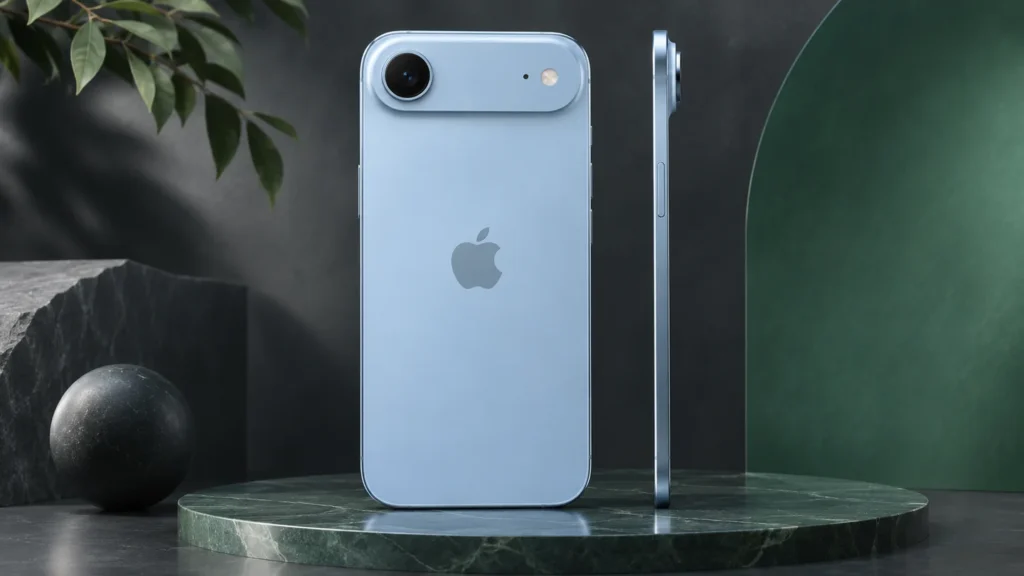
The iPhone Air is worth considering if you want a roomy 6.5-inch display in a 165-gram phone. Choose the iPhone 17 if you value an ultrawide camera and longer Apple-rated video playback, or compare the 17 Pro if you frequently shoot at a distance.
This editorial review uses Apple’s published specifications and model comparisons. Battery figures are Apple’s playback ratings. The featured image is an editorial illustration.
Design and display
Apple lists the iPhone Air at 5.64 mm thick with a titanium design and a 6.5-inch OLED display. That puts it between the 6.3-inch iPhone 17 and the 6.9-inch iPhone 17 Pro Max by screen size. The Air’s appeal is that you can get more screen area than the standard 17 while carrying a lighter phone. Screen size and one-handed reach are separate considerations. If you usually type one-handed, try reaching the top corners in a store, ideally with the case you’d use.
The display supports ProMotion up to 120Hz. The finishes include Sky Blue, Light Gold, Cloud White and Space Black. If you find a used iPhone Air, check the frame for bends and the screen for damage, and verify that Face ID, touch input and charging work before buying. Apple iPhone Air technical specifications
Everyday performance and storage
The Air uses Apple’s A19 Pro chip. Storage options are 256 GB, 512 GB and 1 TB. The 256 GB option is the starting point for shoppers who mainly stream media and keep photos in the cloud. If you keep large games, offline video or years of photos on-device, open Settings → General → iPhone Storage on your current phone and use its total as a starting point. Leave room for what you expect to add during ownership.
Camera and battery trade-offs
The Air has one physical 48MP rear camera. It offers a 2x framing option using the main camera sensor. The iPhone 17 includes a separate ultrawide camera, useful for fitting a group or small room into the frame. The 17 Pro adds a dedicated telephoto camera, a better comparison point if you frequently shoot sports, concerts or subjects across a room. Apple iPhone model comparison
Apple rates iPhone Air for up to 27 hours of video playback and up to 22 hours of streamed video playback. Navigation, mobile data, recording and screen brightness can change how long it lasts between charges. If most of your day is spent away from a charger, compare the models using the same playback metric and weigh the extra bulk of carrying a power bank. The Air supports USB-C charging and MagSafe wireless charging up to 20W with compatible equipment. Apple iPhone Air technical specifications
iPhone Air vs. iPhone 17, 17 Pro and 17 Pro Max
| Model | Why choose it | What to compare before buying |
|---|---|---|
| iPhone Air | Thin, light body with a 6.5-inch screen | Single rear camera and eSIM-only setup |
| iPhone 17 | 6.3-inch screen with an ultrawide camera | Smaller screen than the Air |
| iPhone 17 Pro | Dedicated telephoto camera and more camera flexibility | Weight and price |
| iPhone 17 Pro Max | Largest screen in this group and the highest Apple-rated video playback | Pocket fit and one-handed use |
If you already have an iPhone 16 Pro or 15 Pro, check how often you actually use ultrawide or telephoto before trading in. Moving to the Air makes more sense if you want a lighter device and mainly use the standard rear camera. If your current phone is an iPhone 16 and is still working well, look at the actual trade-in difference and the features you’d gain or give up before upgrading. Apple iPhone model comparison
eSIM and buying used
The iPhone Air is eSIM-only. Confirm your carrier supports eSIM on the plan you use, especially if you rely on a prepaid or travel SIM. When transferring a line from another iPhone, check your carrier’s eSIM transfer process and test a call and mobile data on the Air before erasing the old device. For a used or refurbished Air, also check carrier-lock status, battery health, the return policy and whether the phone can be set up without someone else’s Apple Account.
Frequently asked questions
Is iPhone Air worth buying for the camera?
It can suit everyday photos. Pick the iPhone 17 or 17 Pro if you regularly need ultrawide or dedicated telephoto framing.
What is the iPhone Air screen size?
It has a 6.5-inch OLED display measured diagonally as a rectangle. Apple notes that the viewable area is slightly smaller when accounting for the rounded corners.
Is 256 GB enough on iPhone Air?
It’s a sensible starting point for everyday use. Check your current local storage and how much video, games and offline media you plan to keep.
Does iPhone Air accept a physical SIM card?
It uses eSIM. Verify that your carrier can activate your exact plan before buying.
Which iPhone Air color is gold?
Apple calls the finish Light Gold. The other finishes are Sky Blue, Cloud White and Space Black.
After setting up a new iPhone, see our guide to finding hidden apps and restoring them to your Home Screen.