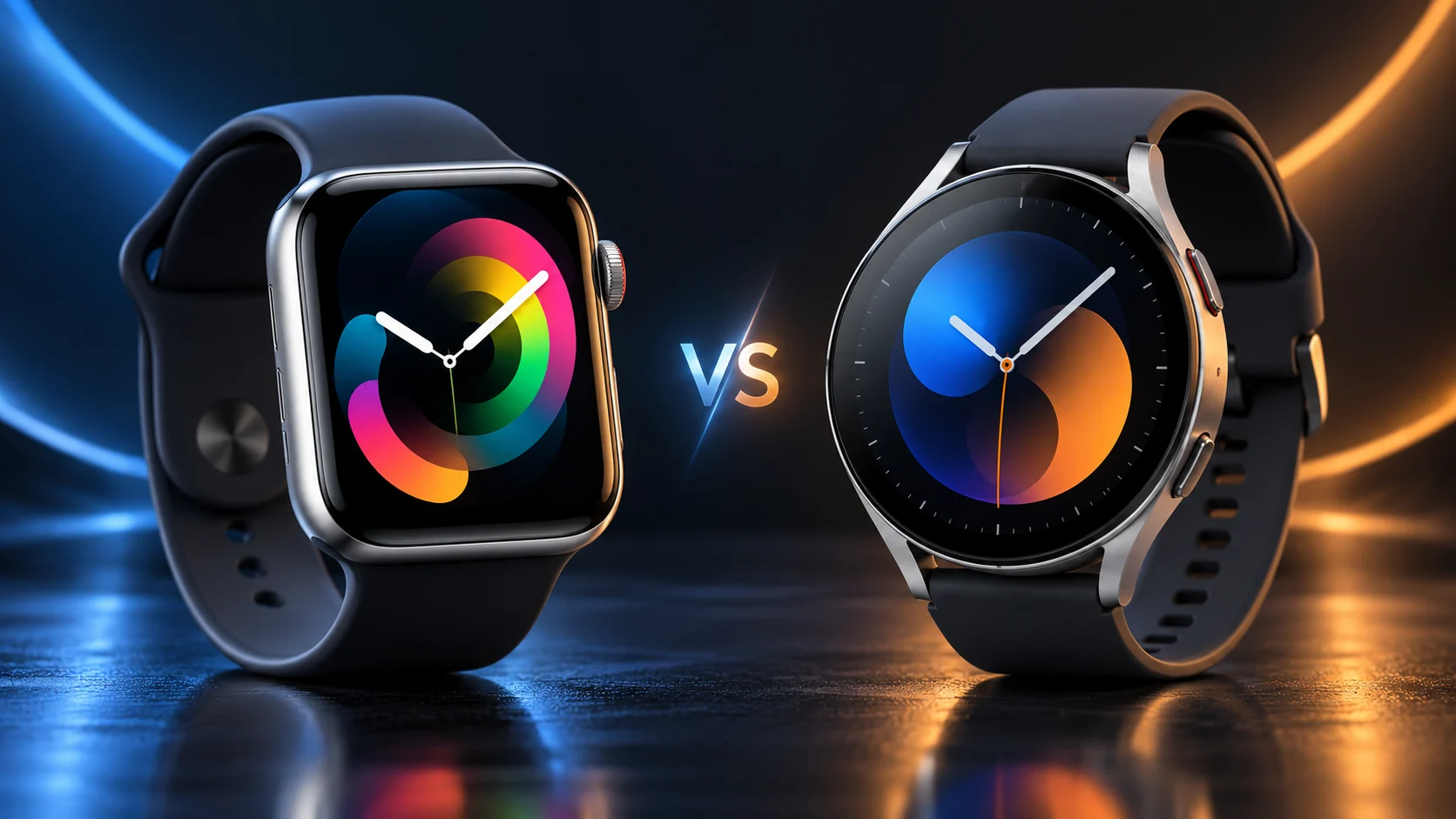
Choosing between an Apple Watch and a Samsung smartwatch starts with one practical question: which phone do you already use?
Both brands offer watches that help you stay connected, track activity and manage everyday tasks. But the best smartwatch is the one that fits naturally into your routine. For iPhone owners, Apple Watch has a clear advantage: it belongs to the same ecosystem as their phone.
This Apple Watch vs Samsung smartwatch comparison explains why Apple Watch is the more practical choice for iPhone users, what to compare before buying, and when a Samsung Galaxy Watch makes better sense.
Apple Watch vs Samsung Smartwatch: The Quick Answer
Choose Apple Watch if you own a compatible iPhone and want a watch designed to work with it. Choose Samsung Galaxy Watch if you use a compatible Android phone, especially a Samsung Galaxy.
Apple lists specific iPhone and software requirements for each Apple Watch generation. Samsung states that its newer Wear OS watches do not support iOS, although some older Samsung watches offered iPhone compatibility. That makes phone compatibility the first buying decision—not a small detail to check afterward.
| Buying consideration | Apple Watch | Samsung Galaxy Watch |
|---|---|---|
| Phone ecosystem | Designed around compatible iPhones | Modern models work with compatible Android phones |
| Best reason to choose it | Integration with your existing Apple devices and services | Integration with Android, particularly Samsung Galaxy |
| Before buying | Check the exact iPhone and iOS requirements | Check Android requirements and phone-specific restrictions |
| Health features | Compare the exact model and regional availability | Compare the exact model, region and paired-phone requirements |
| Battery and value | Compare individual models | Compare individual models |
Why Apple Watch Is the Better Fit for iPhone Users
1. Compatibility Makes the Purchase More Useful
A smartwatch can have an attractive display and a long feature list, but those advantages mean little if it cannot work properly with your phone.
For an iPhone owner, Apple Watch offers a supported pairing path within Apple’s ecosystem. Before buying, check Apple’s compatibility table, particularly if you own an older iPhone or are considering a second-hand watch.
A newer Galaxy Watch is not a practical alternative for that same iPhone owner because Samsung’s Wear OS models do not support iOS. Choosing Apple Watch avoids buying a device that requires changing phones to use it as intended.
2. It Fits an Existing Apple Routine
If your daily routine already revolves around an iPhone and Apple services, choosing Apple Watch is a logical extension of that setup.
Apple’s watch platform includes communication, fitness and everyday convenience features. The benefit is having useful interactions available on your wrist: checking information quickly, handling a short task and returning to what you were doing.
Our assessment is that this ecosystem fit gives Apple Watch its strongest advantage for iPhone owners. It is a practical reason to choose it without needing to claim that Apple wins every hardware comparison.
3. You Can Choose Around Your Actual Needs
Buying a smartwatch should start with the tasks you expect it to perform.
Do you mainly want activity tracking and notifications? Are you interested in more advanced health features? Will you use it during outdoor exercise? Would cellular connectivity be useful?
Apple offers different watch models, so compare the features of the specific device you intend to buy. A more expensive watch is worthwhile only when its additional capabilities solve a problem you actually have.
The same principle applies when comparing it with Samsung: match the intended use and product tier before judging value.
Health and Fitness: Compare Features Carefully
Health tracking is a major reason people buy smartwatches, but a brand name alone does not tell you which features you will receive.
Check the exact watch model, required software, supported country and any phone restrictions. Avoid assuming that every watch from a brand includes the same sensors or capabilities.
Samsung, for example, lists several Samsung Health Monitor functions as requiring a Samsung phone. That matters for buyers who own another Android brand and expect access to every advertised feature.
For iPhone users, Apple Watch is the more straightforward starting point for this comparison. However, compatibility does not prove that every Apple model offers better tracking accuracy than every Samsung model. That would require testing the specific devices.
The useful question is: does this watch provide the tracking features I want with the phone I already own?
Battery Life: Look Beyond the Brand
Battery life should be compared between individual watches rather than treated as a universal Apple-versus-Samsung result.
Display settings, GPS workouts, cellular use and other features can affect how often a watch needs charging. Manufacturer estimates are a useful starting point, but the test conditions matter.
If you want to track sleep, think about when you would charge the watch. If you regularly take long outdoor trips, investigate the battery performance of the exact model under those conditions.
Apple Watch can still be the better overall choice for an iPhone owner even when another watch has an attractive battery specification. Compatibility and everyday usefulness remain part of the decision.
Price and Value: Buy the Features You Will Use
The best value smartwatch is one whose useful features justify its total cost.
Compare the watch price alongside any cellular-plan charges, accessories and warranty coverage. When considering a discounted or refurbished model, check its condition and compatibility before treating the lower price as a bargain.
For an iPhone owner, switching to Android solely to use a Galaxy Watch would also add the cost and inconvenience of changing phones. That makes Apple Watch easier to justify when the goal is simply to add a smartwatch to an existing setup.
When Samsung Galaxy Watch Makes More Sense
Samsung Galaxy Watch deserves serious consideration if you already use a compatible Android phone.
Samsung supports many everyday functions on both Samsung and other Android phones, including calls, notifications and activity tracking. Some ecosystem features have additional restrictions, so check the features that matter to you before buying.
For a Galaxy phone owner, Samsung’s watch may offer the same practical ecosystem advantage that Apple Watch offers an iPhone owner.
Final Verdict: Is Apple Watch Better Than Samsung?
Apple Watch is the better choice for most compatible iPhone owners because it fits the phone and ecosystem they already use.
That is the strongest reason to choose it. A smartwatch should make your existing routine easier, and supported phone compatibility is essential to that experience.
For Android owners, Samsung Galaxy Watch is the more relevant option to investigate. For iPhone owners, start with Apple Watch, compare the available models and pay for the features you will actually use.
Frequently Asked Questions
Can a modern Samsung Galaxy Watch work with an iPhone?
Samsung states that its newer Wear OS watches are not compatible with iOS. Some older Samsung watches supported iPhones, so check the exact model rather than assuming compatibility.
What should I check before buying an Apple Watch?
Check the watch’s required iPhone model and iOS version, then compare its features, battery specifications, connectivity options and price.
Is Apple Watch always better for fitness tracking?
There is no reliable brand-wide answer. Compare the specific watches and the tracking features you need. Accuracy claims require evidence from testing those models.
Should I change phones just to buy a smartwatch?
For most buyers, choosing a watch that works with their existing phone is the more practical starting point. Consider changing ecosystems only if you already have broader reasons to change phones.
Sources and Editorial Notes
This is a buying guide based on official compatibility documentation, rather than a hands-on test of individual watches. Features and support vary by model, software version and region. The cover image is an AI-generated comparison illustration.