Tesla Roadster specs need a configuration label and a date. Without those two pieces of context, a table can combine the original car, an earlier concept and the latest manufacturer presentation into a vehicle that does not actually exist.
This guide explains the latest specification questions as of October 16, 2026. It deliberately leaves unsupported figures blank rather than turning an old target into a current fact. For an overview of the whole program, begin with our Tesla Roadster guide.
Current configuration differences
| Configuration | Seating shown by Tesla | Important distinction |
|---|---|---|
| Performance | Two | Road-oriented configuration |
| Thrust | Two | Rear thrusters; Tesla claims sub-one-second 0–60 mph |
| Rocket | One | Perimeter thrusters; Tesla says not approved for public-road use |
These are manufacturer descriptions, not independent test results or proof of regional approval. Equipment availability must be checked against the actual order specification.
Which numbers still need confirmation?
| Specification | What a reliable final figure should include |
|---|---|
| Battery capacity | Usable versus gross energy, configuration and measurement basis |
| Driving range | Certification cycle, wheels and relevant market |
| Charging speed | Connector, compatible charger, temperature and state-of-charge window |
| Top speed | Test conditions, tire rating and configuration |
| Dimensions and weight | Production drawing or homologation data, with measurement definitions |
| Price and delivery | Regional terms, selected equipment and an actual delivery commitment |
The reviewed sources do not establish a complete current production table for these items. A missing value is a research boundary, not a reason to estimate from an image or a different Tesla model.
Why acceleration figures can be hard to compare
Timing methods can change the apparent result. A test that excludes the first part of the launch through rollout is different from a standing-start measurement that includes it. Track preparation and tires also influence how much force can be transmitted before wheelspin occurs.
Compare runs only after checking their definitions. Ask whether the result includes optional equipment, whether it is repeatable and whether it measures the same speed interval. A 0–60 mph result should not be relabeled as 0–100 km/h: those endpoints differ.
Range is not a fixed distance in every situation
Energy use changes with speed, temperature, elevation, tires, climate control and driving style. High-speed operation can demand much more energy per mile than gentle urban use. A very fast launch and a long-distance range target describe different operating situations.
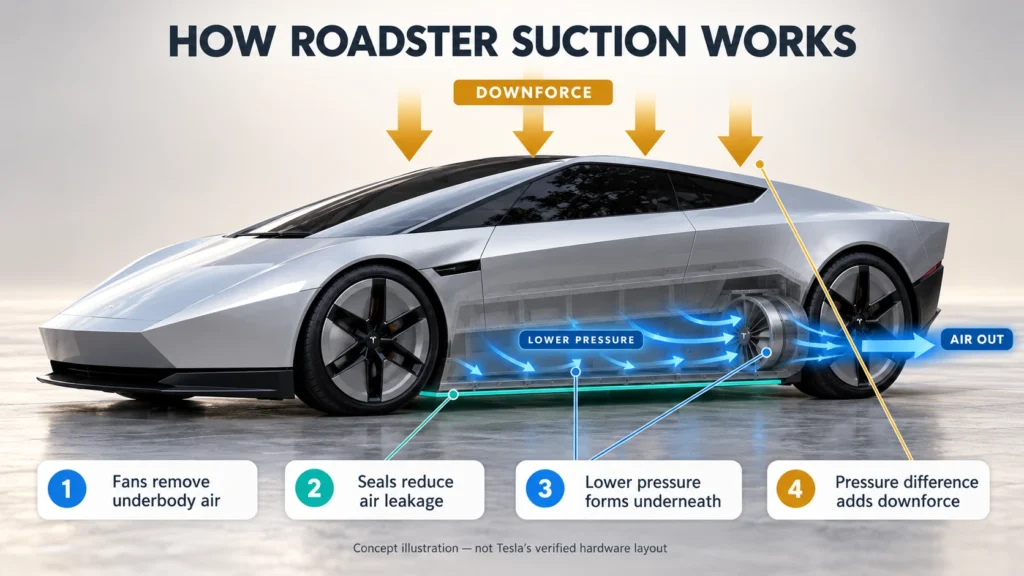
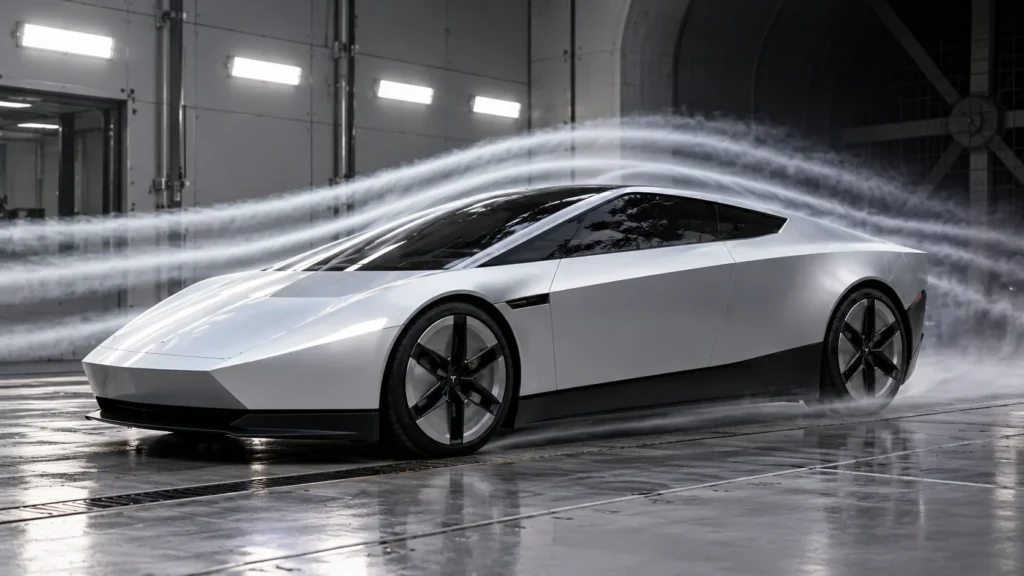
The battery guide explains why energy capacity alone cannot establish range. For the relationship between speed and aerodynamic resistance, see the aerodynamics guide.
Dimensions need definitions
A vehicle’s published width may include mirrors, exclude them or describe a folded-mirror position. Height can depend on suspension mode and loading. A curb-weight figure may follow a particular regional convention. These details affect whether two cars can be compared fairly.
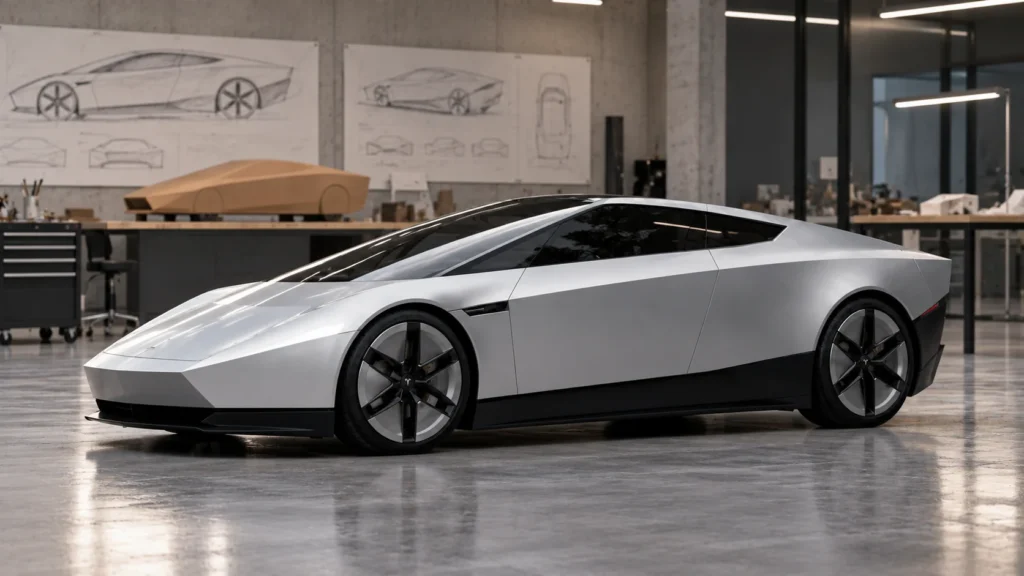
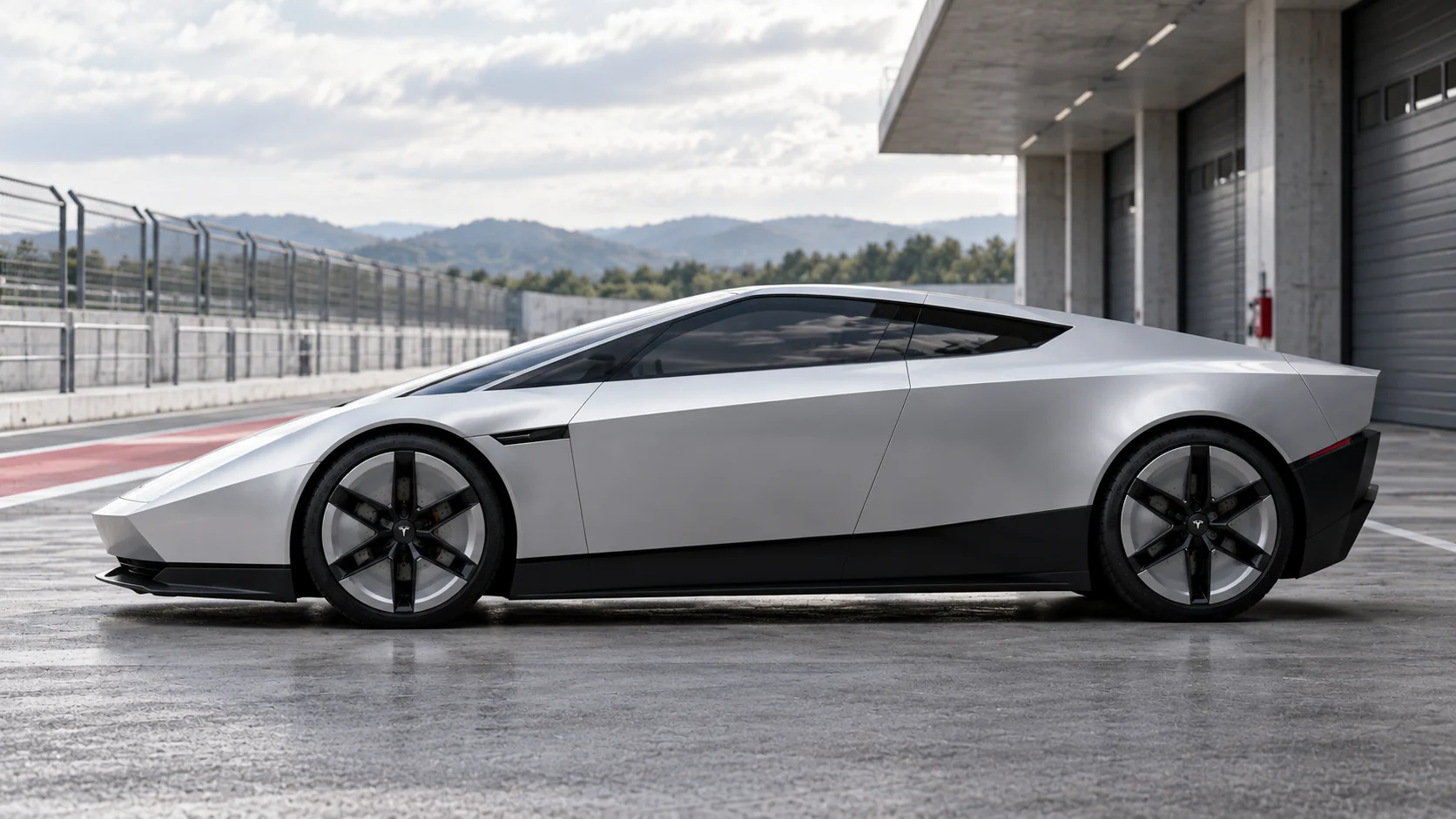
A promotional image cannot settle garage clearance, luggage capacity or seating comfort. Those questions need measurements and, ideally, access to a production vehicle. Until then, a photo is useful for design reference rather than dimensional proof.
Keep the original car in its own table
Tesla’s original-generation service manual lists a 3,946 mm length, 2,351 mm wheelbase and 1,235 kg curb weight. Those figures describe the historical vehicle covered by that manual. They must not fill gaps in a specification sheet for the newer program.
The same rule applies to drivetrain data and battery information. Our development history explains why sharing a name does not mean sharing the same hardware.
Frequently asked questions
Does the new Roadster have four seats?
The current Tesla presentation reviewed for this guide shows two seats for Performance and Thrust and one for Rocket. Older descriptions should be dated separately.
Is the acceleration claim independently verified here?
No. This article identifies Tesla’s claim and the evidence needed for a meaningful comparison.
Can the original Roadster’s dimensions describe the new car?
No. Each generation needs its own measurements.
Sources and research notes
- Tesla: current configurations and footnotes
- Tesla: original-generation technical data
- NASA: aerodynamic drag fundamentals
Checked October 16, 2026. General engineering explanations are distinguished from model-specific claims. This article is updated only when new evidence supports a change.