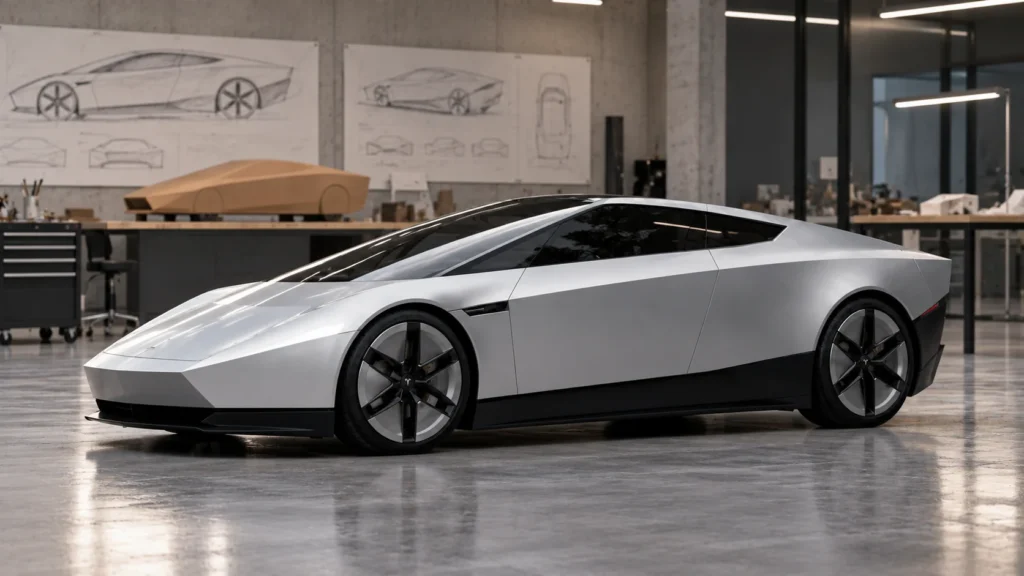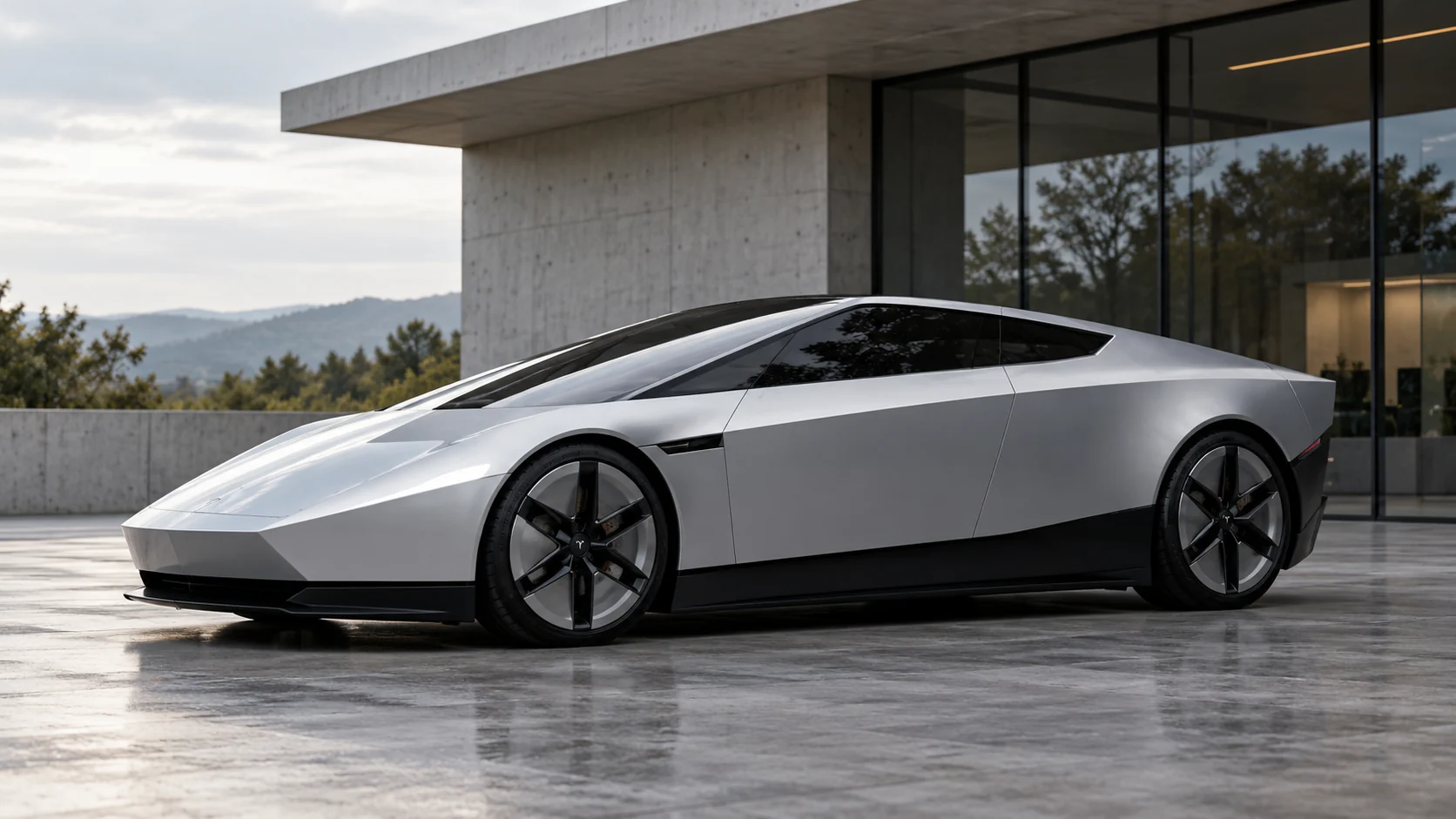
The Tesla Roadster is an electric sports car with a history that now spans two very different projects: Tesla’s original production car and its newer flagship performance program. Understanding which version an article describes is essential. An old specification can be accurate for its time while being misleading in a guide to the latest vehicle.
This guide separates the current manufacturer presentation from historical information and explains where the engineering questions remain open. Research was checked on October 16, 2026. Manufacturer announcements describe intended capability; they do not replace an independently tested production specification.
What is the Tesla Roadster?
The original Roadster established Tesla’s approach to a battery-powered sports car. The newer program pursues a broader performance envelope, bringing vehicle dynamics, energy delivery and aerodynamic control into the same conversation. For readers, the useful starting point is the car’s configuration rather than one headline acceleration number.
Tesla’s current presentation identifies Performance, Thrust and Rocket configurations. Their equipment and intended uses differ. Some page specifications refer specifically to an optional augment, so reading every claim as standard equipment would give the wrong impression. The Roadster specifications guide explains how to compare configurations without mixing their claims.
Why the technology matters
A fast electric car needs more than a powerful motor. Its battery must supply energy at a high rate, power electronics must control delivery, tires must transfer force, and the chassis must remain predictable as loads change. A weakness in any part can restrict the overall result. Extra peak power is less useful if the car cannot use it consistently.
The battery technology explainer focuses on this distinction between stored energy and available power. It also identifies the pack details that should remain open questions until supported by model-specific documentation.
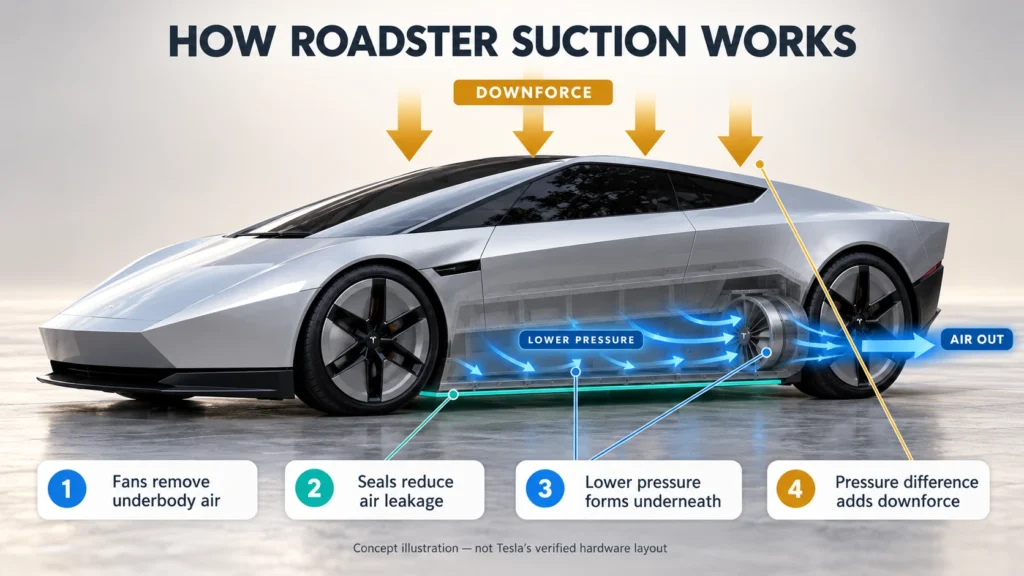
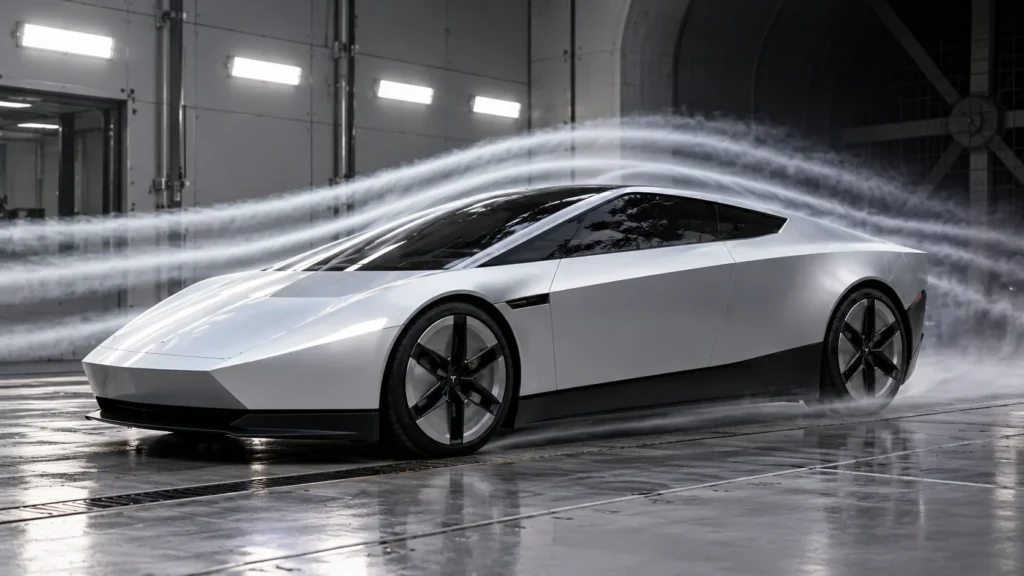
Two other systems deserve separate explanations. Cold-gas thrusters concern reaction force from expelled gas. Aerodynamic systems concern how air pressure and airflow affect the vehicle. These mechanisms can interact, but they should not be treated as interchangeable.
For a detailed explanation of powered fans and ground sealing, read our Tesla Roadster suction system guide. It explains how suction differs from wings and thrusters.
Why is the Roadster called a Tesla flying car?
The “Tesla flying car” description refers to the Roadster’s Rocket configuration and Tesla’s claims about its ability to move beyond conventional road driving. Tesla describes perimeter cold-gas thrusters that support upward acceleration and rotational movement. These claims should be distinguished from the equipment and intended use of other Roadster configurations: Tesla states that Rocket is not approved for public road use. For the mechanism and its unanswered engineering questions, see our Roadster cold-gas thrusters explainer.
Price, reservations and delivery expectations
A reservation payment is not automatically the final purchase price. Before interpreting a booking page, check the country, currency, configuration, refundable amount and remaining payment terms. A figure from an older announcement may no longer describe the product currently being presented.
This guide does not state a final price or guaranteed customer delivery date because the reviewed material does not establish those details reliably enough. Readers considering a reservation should use Tesla’s current regional agreement rather than an undated price copied between websites.
How to judge performance claims
Useful acceleration evidence includes the vehicle configuration, tire specification, surface preparation, rollout treatment, battery state of charge and timing equipment. A short video can show a demonstration while leaving several of these variables unanswered. Repeatability matters too: a single run does not establish how the same vehicle performs after repeated launches.
Range needs comparable care. A certification-cycle result, a steady-speed road test and a track session describe different driving conditions. They should not be combined into one implied promise about every journey.
Which Roadster information should you trust?
Start with the model generation and publication date. Then identify whether a statement is an official specification, a development target, a demonstration or an independent measurement. This approach helps prevent older photographs and figures from silently becoming evidence for a newer car.
For context on the original production vehicle and the challenges of turning a prototype into a saleable car, read the Roadster development history. The original car’s documented hardware remains useful history, but it is not a substitute for the new model’s technical data.
Frequently asked questions
Is every Tesla Roadster specification final?
No. Treat configuration-specific manufacturer claims separately from completed production documentation and independent testing.
Does an older Roadster price apply today?
Check the current regional terms. An historical announcement or deposit amount should not be presented as a confirmed current purchase price.
Where should I start in this article series?
Use the specs guide for comparison, the battery and aerodynamics guides for engineering, and the history article for the original vehicle’s development.
Sources and research notes
- Tesla: current Roadster presentation
- Tesla: original production announcement
- U.S. Department of Energy: electric-vehicle components
Checked October 16, 2026. General engineering explanations are distinguished from model-specific claims. This article is updated only when new evidence supports a change.