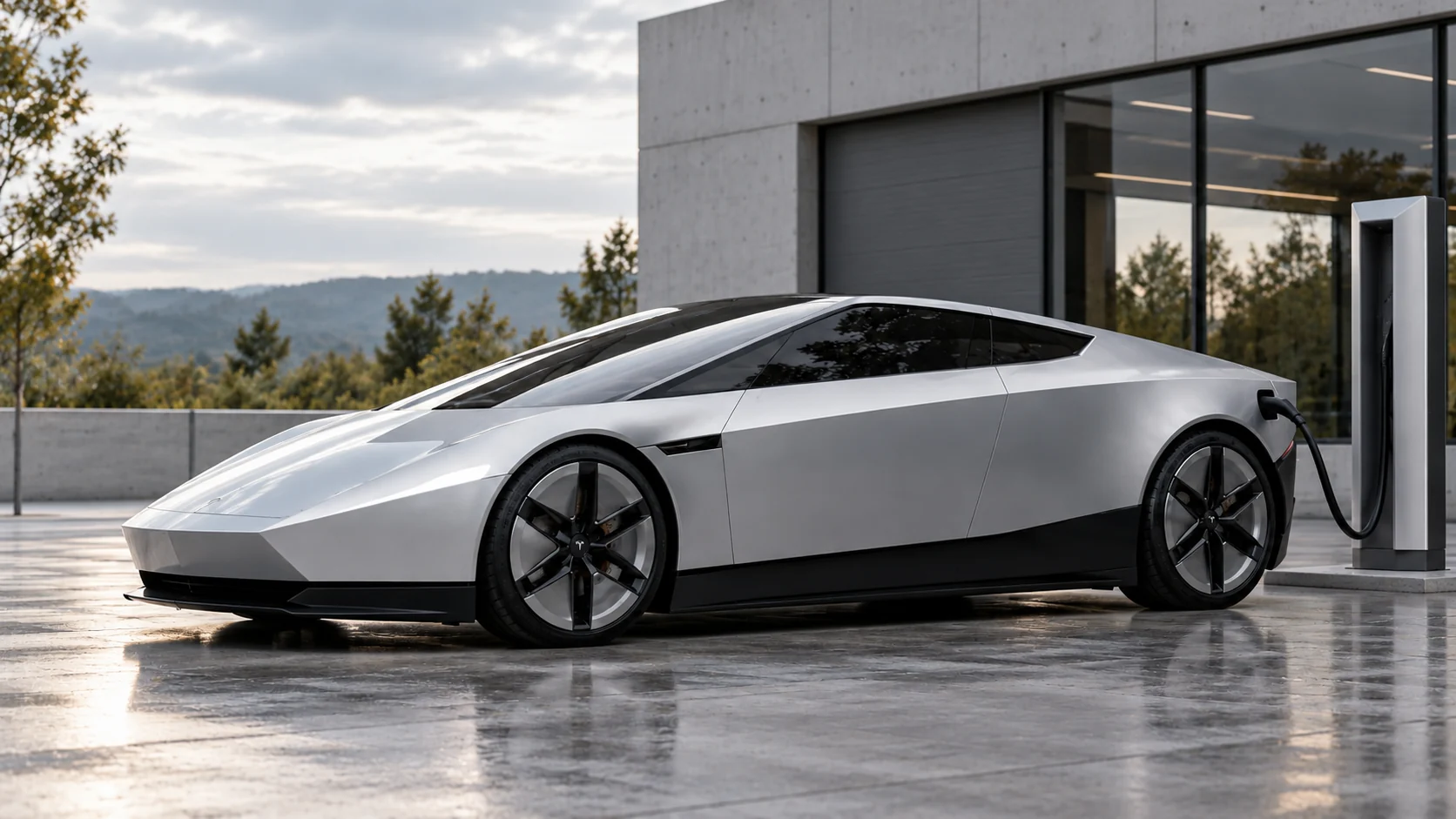
Tesla Roadster battery technology is central to the car’s performance, but a fast acceleration claim does not reveal the complete battery design. Pack energy, cell chemistry, cooling architecture and electrical power capability are different properties. Knowing one does not allow the others to be inferred reliably.
Practical example & checks
Check an energy calculation without assigning an unverified pack
| Evidence item | How to read it |
|---|---|
| Hypothetical usable energy | 80 kWh |
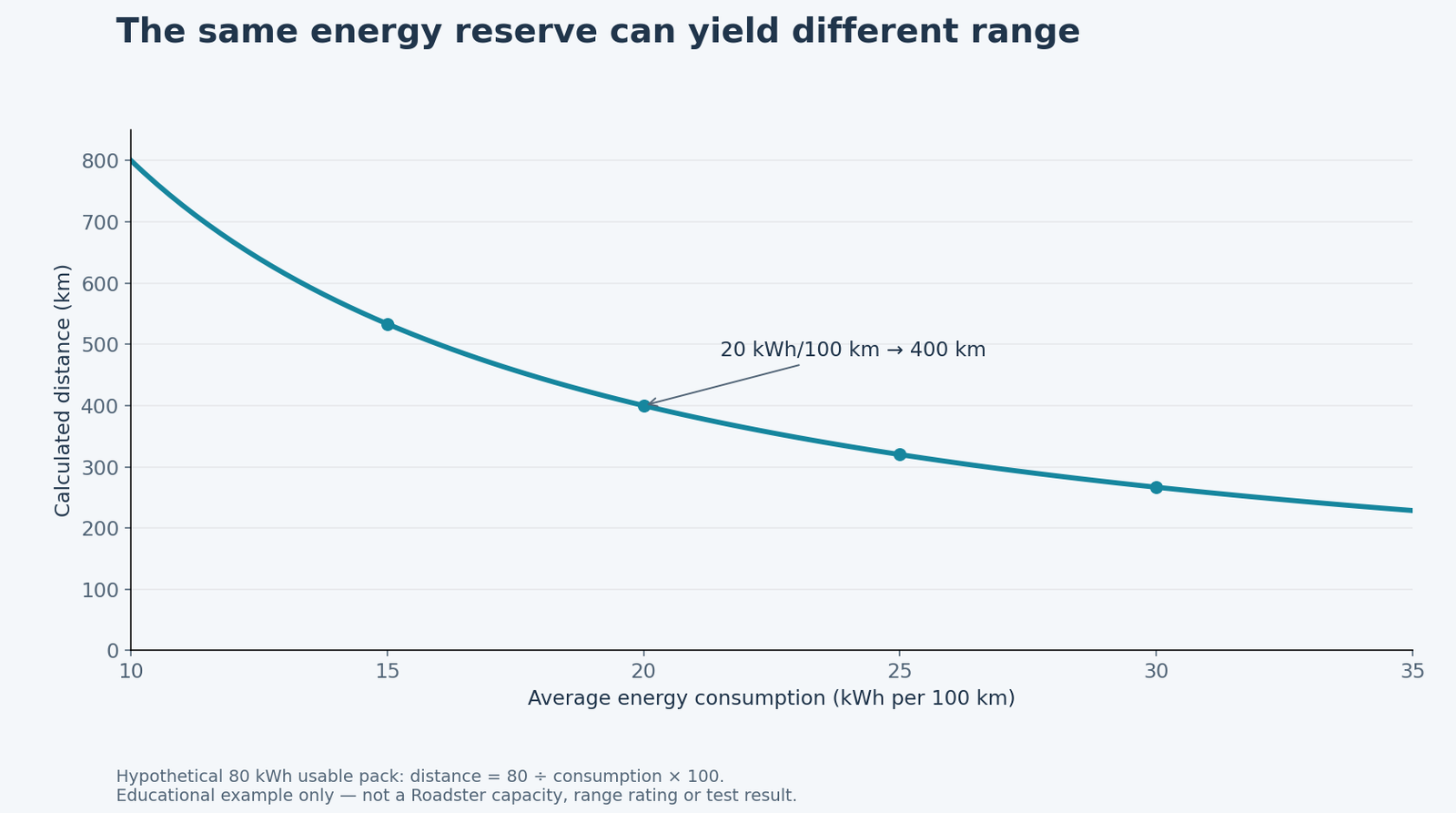
| Hypothetical consumption | 20 kWh per 100 km |
| Idealised distance | 80 ÷ 20 × 100 = 400 km |
| Not included | Reserves, changing consumption, weather or a Roadster specification |
These are explanatory checks, not a new vehicle test. Keep a claim log containing source URL, configuration, date and whether the statement is an announcement or measurement. If a source changes, update the affected claim and record the correction. The manufacturer’s current Roadster page must be read with its regional/configuration footnotes; a conceptual illustration cannot establish hidden hardware.
Original ThinkQuarry teaching material added 19 October 2026. Hypothetical examples are not product-test results.
As of October 16, 2026, the primary sources reviewed for this guide do not provide a complete current production battery specification. This article explains the engineering questions without assigning an unconfirmed chemistry, cell format, pack capacity or voltage to the new vehicle.
Energy and power answer different questions
Battery energy, usually expressed in kilowatt-hours, describes the amount of electrical energy available. Power, expressed in kilowatts, describes how quickly energy is delivered or absorbed. The distinction is similar to the difference between a quantity and a rate.
For an illustrative calculation, a hypothetical 80 kWh usable pack supplying an average 20 kWh per 100 km would imply 400 km before allowing for reserves or changing conditions. These numbers are teaching examples, not Roadster specifications. Real consumption changes across a journey.
A pack may store substantial energy while being limited in peak output. Conversely, a system optimized for brief bursts of power does not automatically provide exceptional cruising range. A useful technical specification needs both sets of information.
How the electrical system fits together
The Department of Energy’s general EV explanation identifies the traction battery, electric motor, power electronics and thermal system as distinct components. Their coordination matters: storing energy, controlling current and converting electrical input into motion are separate jobs.
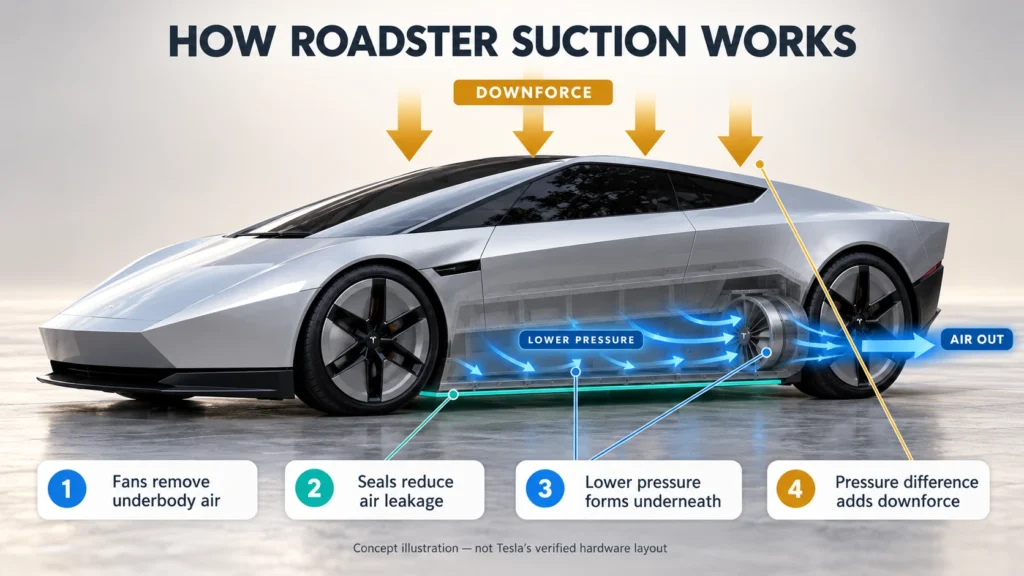
This is a general description of battery-electric architecture, not a teardown of the new Roadster. Without a model-specific schematic, it would be premature to describe the exact module layout, wiring arrangement or cooling channels.
Why temperature management matters
High electrical demand produces heat in cells and other components. Repeated hard acceleration can therefore place different demands on the system from steady cruising. Engineers must balance output, temperature, component durability and the energy needed to operate auxiliary equipment.
For a buyer or reviewer, repeatability is a useful question. How does performance change after several launches? What preparation does the car require? How quickly does it recover? These questions reveal more about sustained capability than a single peak figure.
Charging needs a curve, not just a peak
A maximum charging-power number describes only one point in a session. A more informative result records charging time across a stated battery percentage window, starting temperature, charger capability and energy added.
Charging speed can taper as a pack fills. Two cars with similar advertised peak power may therefore take different amounts of time to complete the same percentage window. Neither an unconfirmed connector assumption nor a charging claim from another Tesla model should be copied into a Roadster guide.
What the original Roadster tells us
The historical service manual describes an original-generation lithium-ion battery containing 6,831 cells, with a pack weight of approximately 408 kg and high-voltage output around 400 V DC. These are documented historical details, not confirmation of the newer car’s architecture.
The development history puts that early hardware in context. It shows why battery packaging was already an important engineering problem before the current performance program.
What evidence would settle the open questions?
A production specification should identify usable energy, operating limits and the exact configuration. A charging test should disclose its conditions. A service document or authenticated teardown could establish architecture, while a certification document could clarify the basis of a range rating.
Until those sources are available, the most useful approach is to label unknowns clearly. Read the specifications guide for the complete evidence checklist and the main Roadster article for an overview.
Frequently asked questions
Is a particular battery capacity confirmed in this guide?
No. No current production capacity is asserted from the reviewed sources.
Does a larger battery always mean a faster car?
No. Power delivery, mass, temperature control and traction also matter.
Can the original Roadster’s cells describe the new pack?
No. Historical specifications should stay attached to their own generation.
Sources and research notes
- DOE: how battery-electric vehicles work
- Tesla: historical Roadster battery data
- Tesla: current product presentation
Checked October 16, 2026. General engineering explanations are distinguished from model-specific claims. This article is updated only when new evidence supports a change.