Tesla Roadster rocket thrusters attract attention because they suggest a force source beyond the tires. The important engineering distinction is cold-gas propulsion: expelling pressurized gas can create a reaction force without burning fuel in the nozzle.
This explanation separates basic physics from vehicle-specific evidence. NASA’s spacecraft propulsion material helps explain the mechanism, but it is not documentation for Tesla hardware. The Roadster’s actual pressure, gas composition, thrust output and operating duration are not established here.
How a cold-gas thruster produces force
A pressurized system stores gas and releases it through a controlled outlet. Gas moving one way transfers momentum, producing a reaction in the other direction. The useful force depends on factors such as mass flow and exhaust conditions.
Unlike a combustion rocket, the mechanism does not require burning propellant in a combustion chamber. The word “cold” describes that distinction; it does not mean every component operates at ambient temperature or that high-pressure hardware is simple.
Spacecraft examples are useful for explaining the principle, but spacecraft and road vehicles face different operating conditions. Their tank sizes, control needs, surroundings and acceptable operating envelopes cannot simply be assumed to match.
Why this differs from adding motor power
A wheel-driven car transfers force through contact with the surface. The amount of usable force is influenced by tire behavior and the load on each wheel. More motor output does not guarantee more acceleration if the tires cannot transmit it.
A correctly oriented thruster can add reaction force through expelled gas. That makes it a different mechanism from sending more electrical power to the motors. It also introduces a separate resource limit: the amount and condition of stored gas available for use.
Where placement changes the effect
Force direction matters. A rearward jet can contribute forward force, while a force applied away from the vehicle’s center of mass can also create rotation. Coordinating several outlets therefore becomes a controls problem as well as a propulsion problem.
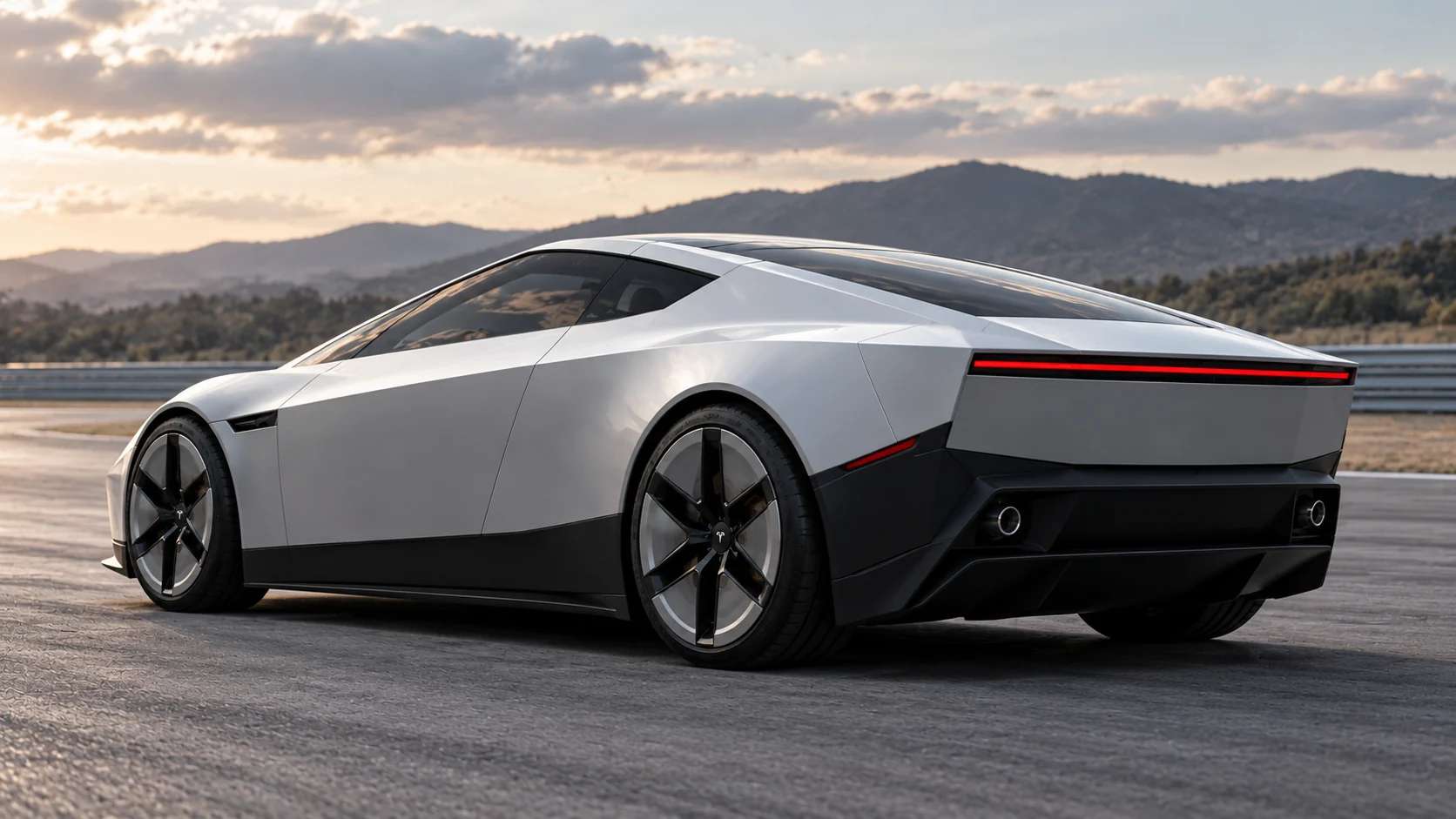
Tesla’s presentation distinguishes rear thrusters on Thrust from perimeter placement on Rocket. Its current descriptions should not be generalized across every configuration. For the model comparison and manufacturer claim labels, see the Roadster specs guide.
What a complete technical assessment would need
A credible evaluation would identify tank mass and volume, working pressure, gas type, nozzle force, pulse duration and the time needed to restore operating capacity. It would also explain how performance changes as the stored-gas condition changes.
Control-system evidence matters just as much. How are commands limited? What happens if an outlet does not deliver the requested force? How does the vehicle coordinate propulsion with steering and braking? These are open assessment questions, not statements that a particular fault exists.
Thrusters, fans and wings are different systems
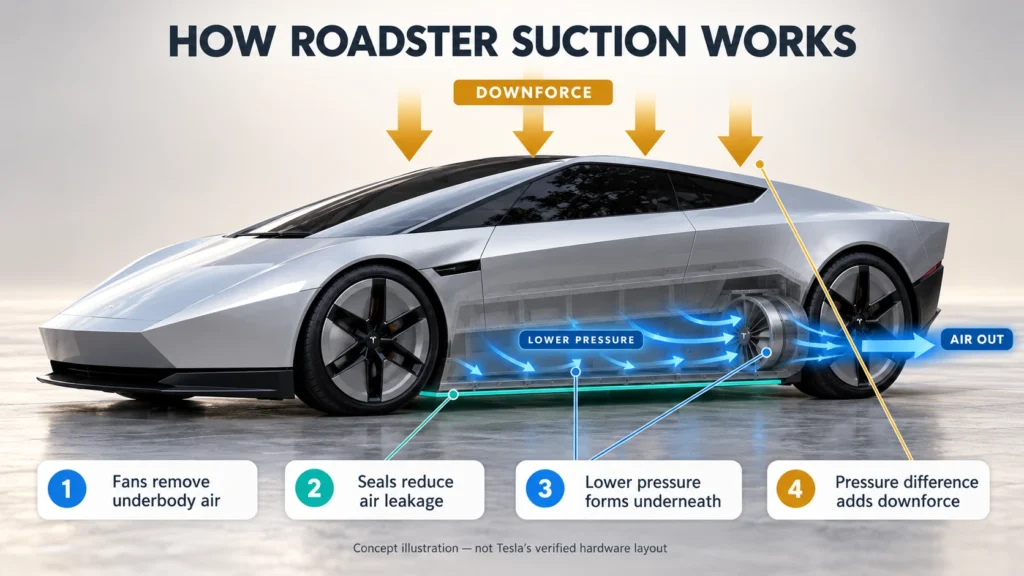
A fan that changes pressure under a vehicle, an aerodynamic wing and a gas thruster do not generate force in the same way. Their energy requirements and responses to vehicle speed also differ. Combining them under the loose label “rocket technology” hides the distinctions that make the engineering interesting.
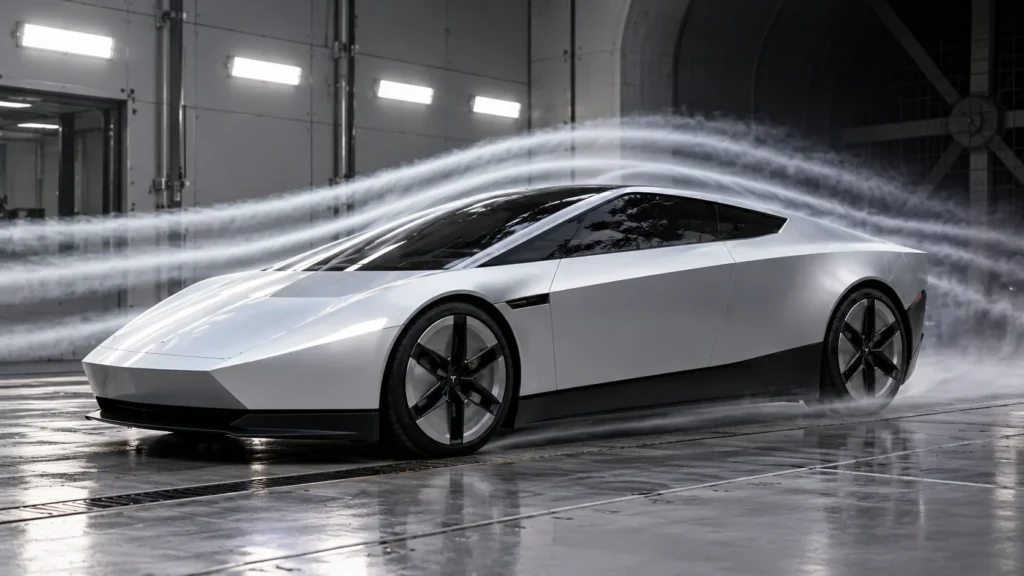
Our aerodynamics guide explains airflow and pressure effects. The battery guide covers electrical energy and power, without assuming the battery is the sole store of every form of energy used by an augmented vehicle.
What should readers conclude today?
Cold-gas propulsion is an established physical mechanism. Its existence in aerospace does not independently validate a particular automotive performance claim. A useful review needs configuration-specific measurements and operating conditions, especially for claims involving movement beyond conventional road driving.
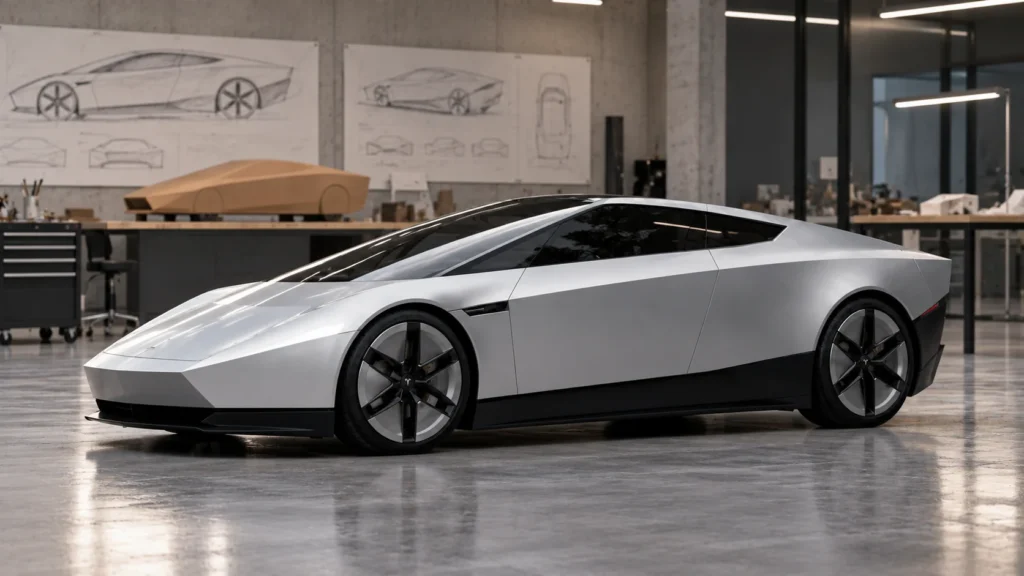
For broader context, return to the main Tesla Roadster guide. The AI-generated illustration in this article is conceptual rather than proof of tested capability.
Frequently asked questions
Do cold-gas thrusters burn rocket fuel?
The basic cold-gas mechanism releases stored pressurized gas without combustion in the thruster.
Does NASA’s research verify Tesla’s implementation?
No. It supports the general explanation of propulsion, not the details or performance of the Roadster.
Can we state how many launches the system supports?
No reliable count is established by the sources reviewed for this article.
Sources and research notes
Checked October 16, 2026. General engineering explanations are distinguished from model-specific claims. This article is updated only when new evidence supports a change.